Saturday, December 6, 2025

Blog Post #6

 Delpit "The Silenced Dialogue" 

Argument 

In Lisa Delpit's the Silenced Diaglogue she argues that there is often dialogue that is silenced, for example certain minority group voices may be lessened, or looked at from a perspective that is not equal to their peers. This flows into a classroom enviorment, where teacher hold all of the power and as a result shape the culture and norms of their classroom. When a teacher avoids explicity stating or explaining a rule that occurs in their classroom it puts those that are unaware of that 'silenced dialogue' at a disadvantage. For example a student who just arrived in a 10th grade classroom from another country, may not be aware that they need to ask permission to use the bathroom, they may not know how because of language barriers, or simply are unaware. As a result when they stand up and start to leave the classroom the teacher gets upset with the student and explains that they should know better then to get up and try to leave. But how would that student know these expectations? Especially if in their previous experiences and enviorments they did not occur. These rules may be obvious to students who grew up in these cultures, like a student who has been in the same school district where the rules are around the same with each classroom is more likely to be aware of these unsaid rules, but a student from an outside culture will not be aware of them. Delpit argues that it is the teachers role, as an educator to explain these codes of power to students who may be unaware, for example when that new student arrived in the classroom the teacher could of explained their day to day practices, and some rules and expectations of the classroom versus assuming that the student would be aware of these unsaid rules and expectations. 


IMAGE OF A STUDENT LEAVING THE CLASSROOM. GENERATED BY CHATGPT

Sunday, November 16, 2025

Blog Post #11

Queering our Schools & RI Laws & Policies  

ARGUEMENT

In Queering our Schools, they talk quite a bit on how anti-bullying campaigns dont approach, or remove the issue at its core. Especially when it relates to not only LGBTQ+ students, but other minorties. The article talks about how these kind of bills, and campaigns approach the issue as individualistic versus approaching it as a problem targeted at specific minorties. I actually disagree with this argument, because while the argument states that these are good first steps they dont fix the issue i actually agree with this aspect.  The article approaches it from a stand point of seeming to want to remove, or remodel anti-bullying campaigns and bills. I dont believe that this is the correct approach, I believe that incorporating laws, and campaigns that help keep these youth safe is important. Its difficult though to pass something that will fix the issues these students face, as no matter what there will always be students who will go out of their way to be hateful. This can be seen as effects of anti-bullying campaigns, despite lowering the overall rates of bullying in some cases bullying has become more severe, or youth go out of their way to get around policies in place. For example doing it outside of school property, or in areas that lack cameras. At the end of the day the issue of hatefulness to other students isnt something one policy or bill is going to fix, its something that requires a change of attitude. 

Sunday, November 9, 2025

Blog Post #10

 "What is Neurodiversity" by Caroline Miller

Connection

While reading through this article by one quote, and example stuck with me, in the article overview it mentions activies a lot of children do in school or with friends. "from kids’ birthday parties to school classrooms to adult workplaces, which can be made more comfortable for them. And they are often excluded from things by neurotypical people who misunderstand them.". This stuck out to me because it reminds me so much of when I was younger. Particularly in school enviorments, ive always been known as more anti-social and shy, and this relates to the fact i struggle to operate in new enviorments, or enviorments that can be loud and congested. As a result, a lot of school events, or birthday parties were not my  kind of enviorment and a lot of times I'd skip them. Caroline Miller observes points from both sides, some in support of often having neudivergent children make changes to their lives, or medication to help them in school settings. The other viewpoint is making changes to the infrastructure as it, for example modifying a class enviorment to help benefit all students instead of just the neurotypical. In the article, Miller brings up some common practices that are done to help students for example covering the floruscent lights in a classroom so they are less bright. Alongside trying to create less strict schedules, especially in elementary schools as strict schechules can be harsh on all young children. For example in the school i observe, outside classes like gym, or library are not a set time period. They do it usually when they have time, and there isnt a set time period but the teacher lets them know when they will be going in the morning. 

When attempting to ask Chatgpt to create an image representing neurodiversity in elementary schools, it did not understand so I thought id instead show my failed attempts of getting an image. 

Instead i found this image online, Facebook and thought it represented neurodiversity a bit better, and that we can make accommodations 

Sunday, October 26, 2025

Blog Post #9

Preface + Introduction from Shalaby, TroubleMakers

Relfection

Upon starting this article, the Introduction introduces us to a student who struggles in class with day-to-day tasks, and if the assignment doesnt fall into their interests can become violent, and disruptive to the class. This is very similar to a student in my observation classroom, the student is very bright and is ahead of the whole class is every subject and cares deeply about learning with that being said if they believe a assignment is too easy, or isnt something they want to do at a set time theyll become violent and throw their books, computer etc. But when the student is intent on learning they are focused, and engaged in class. For example I did a small one-on-one test with each student, and it was meant to be like a ladder. The first test was simple and the next week we would progress to a more difficult test. With this in mind, the student walked over and looked at the test and determined it was too easy. They walked away and when i asked them to come sit down, and if they do the test theyll go onto a harder one they said 'nope too easy'. Each student was offered a sticker if they attempted to do the test, as long as they atleast did one of the problems and didnt leave it blank. This was a interesting situation because the studnet had no interest in completeing the assignment, when i asked the teacher they said its okay because she knows the student can do the math worksheet.

The text itself goes on to talk about how between pre-kindergarten and kindergarten teachers observe issues in the transition between the two, because one goes from unstructured to a highly structured day. The quote, "For the word obedience, where I expected a picture of a dog, perhaps, I instead found a young artist who had drawn a row of pupils at their desks sitting straight, hands clasped, facing forward." (Shalaby, xxvi). This quote in particular made me reflect on my own experience, and made me take a step back and really reflect on how obedience is taught in a classroom, and how structured a classroom is and how it may effect students. For example - for some students this kind of structured schedule is beneficial, for example growing up i had very few complaints about my day being planned excessively because it helps me to know exactly how ill spend my day. But my experience isnt the same as my peers, and for some people this structure is not helpful or beneficial. Which is why a lot of people who may struggle in K-12 go to college and excell, because college doesnt function off of such a strong structure and students can modify their schedule to fit their own needs.

The image i attached is similar to what a lot of teachers display around a classroom on listening quietly, and being obedience in the classroom. 

Comments to Share:
I'd like to share a recent experience in my observation classroom regarding teaching obedience in the students.

Sunday, October 5, 2025

Blog Post #7

"What to Look for in A Classroom" by Khan & "Introduction to Culturally Relevant Pedagogy" by Learning for Justice 

REFLECTION

Under the Possible Reasons to worry, in What to Look For in a Classroom it is listed,

"Students assignments displayed, but they are (a) suspiciouslt flawless, (b) only from "the best" students, or (c) virtually all alike."

This quote highlights almost perfectly alot of my classrooms growing up, I believe that the shift from everyones work being showed or absolutely no one's occurs in the middle school years. In elementary school I can recall - from my personal experiences everyones work being hung up. But once i reached middle school it became more of the 'selective best' for example in high school I had a assignment, a project of some kind and the teacher hung up the ones that got the best grades or were necessarily visually pleasing. As a result this left some students feeling left out or like their work wasnt necessarily good enough to be displayed in a classroom. This connects to a reason to worry because it can point to favortism with a teacher, or signs that a teacher may be pushing for the very best grades which can be seen in defecit classrooms. 

Under the Good Signs, in What to Look For in a Classroom it is listed,

"Welcoming; eager to explain or demonstrate what theyre doing or to use visitor as a resource"

This quote actually connects directly to my recent observation in a 2nd Grade Classroom, when i entered the room the students were all so excited to meet me. They were all saying, "Hi Mrs. Shannon" and seemed excited to have me in the class some of them even came up to me and introduced themselves and asked me if I'd be joining them for recess. This behavior continued into small groups, and all of the students were excited to be in my group. I can recall even as a young child having visitors in the classroom was always the most exciting experience and I think it shows a healthy classroom enviorment because it shows the students are excited to learn! In particular, the Introduction to Culturally Relevant Pedagogy video talks about invisible, and visible aspects, and some visble aspects i observed was crafts, but also how the students talked. they were encouraged to speak in a native language and werent penalized against it, and other students who may have a different native language were interested in learning about others. In my small group i had two kids, one whose native language was english, and the other spanish and english. We were doing math flashcards and the one whose native language was spanish and english sometimes would answer in spanish, the other student asked the student a question regarding the numbers and then started also answering some in spanish. 

REFLECTION: 
In class I'd like to share how both of these pieces of media tied back to my recent classroom visit, and how i observed different aspects of positive classroom enviorment, but also a few negatives!

Sunday, September 21, 2025

Blog Post #5

 Ethnic Studies by Christine E. Sleeter

Quotes

"While content related to African Americans, Latinos, and Native Americans has been added, deeper patterns and narratives that reflect Euro-American experiences and worldviews, and that have traditionally structured K–12 textbooks—particularly history and social studies texts—remain intact." (Sleeter, 2). 

This quote is one of the first major introductions in Ethnic Studies by Sleeter, and it jumps straight in. It highlights the fact that despite different groups being added to historical textbooks the focus still remains on white americans. Despite these other groups having just as much importance. While these other groups are also introduced, they are introduced in specific areas. For example the chapters that focus on slavery or the civil rights movement, will mention African Americans, but beyond these select chapters the mention of African Americans is very limited. 

"As Hughes (2007) explains, the result of continuing to minimize attention to rac-
ism and White complicity is that students perceive racism as a tragedy of the past divorced from other historical issues...and the contemporary realities of power in American society." (Sleeter, 3)

This quote highlights a current issue that plagues america itself, alot of individuals dont realize that racism is ever present and only refer to extreme actions as 'racism'. Racism being framed to be in the past tense in history classes prevents students from realizing just how racist some things are, and bars students from making these realizations themselves. 

"found that the students felt marginalized and “angry that African American history was
rarely discussed outside Black History Month and was almost always portrayed in terms
of victimization.” Students" (Sleeter, 4)

This quote is very powerful, and made me myself realize something that when we learn about African Americans in middle and highschool it was always in terms of victimization, as i previously mentioned, i can scarcely recall ever learning or reading about african americans outside of the civil rights movement, and when discussing slavery. This creates a dynamic of victimization, and lacks focus on the achievements of African Americans.

 
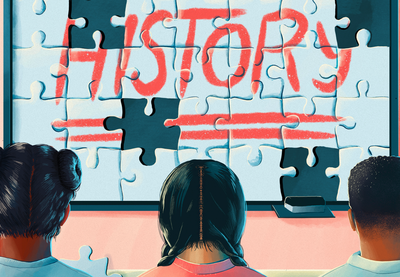
'The Fight for Social Justice' 'The Fight for image illustrates that our history lacks pieces of the puzzle


Reflection:
I think that Sleeter raises numerous points throughout their article, that really made me sit back and think on my own education, and what I learned growing up. Prior to reading Sleeters piece I never really sat down and thought about who we learned about, and that when we did learn about people from other cultures, and backgrounds it was always very selective. 

Sunday, September 14, 2025

Blog Post #4

 Shifting the Paradigm by Renkly & Bertolini

Arguement

In "Shifting the Paradigm," by Renkly and Bertolini, the authors argue that schools would benefit from switching to an abundance model. An abudence model, also known as a asset model focuses on a students strengths, and the skills they do possess. Versus focusing on their weakness, or things that need to be improved upon. The authors argue that in today's society a deficit model is used more widely, and while it may work in some enviorments a school setting is not one of them. A deficit model does the opposite of a asset model, and focuses on a students weaknesses, for example in the text the example of a underachieving student is used, and examines that in a deficit model they may examine that student and determine they arent working hard enough, and need to work harder. In a asset model the student will be examined and their strengths and weaknesses will be identified, and theyll work to help strengthen their strengths. The authors believe that implementing a asset model in schools will benefit not only the students, but also the teachers as it helps the teachers act better as leaders, and the teachers are able to better assist the students. 
The image I posted above demonstrates a deficit model, where we assign students all the same tasks - but not every student possesses the skills to properly complete that task. This in turn negatively effects the students, because they cannot complete the assigned task to the same level as their peers may. I think the image helps demonstrate that the deficit model isnt just saying someone may be failing, due to not trying but it could be a system that actively works against a student succeeding. Similar to articles we have read on Equity versus Equality, where this system might be equal, its not equitable. 

Sunday, September 7, 2025

Blog Post #=3

 "What counts as an Education Policy"

Connection

What counts as an Education Policy by Jean Anyon. To start I would like to clarify that I utilized CHATGPT to provide me with a brief overview of the general topic of Anyon's paper, and used that overview on top of my initial reading to make these connections. The exact prompt i used was, "give me a overview of "What counts as education policy" by anyon". 

In our blog post we read through and analyzed, The Broken Model by Khan. This describes the 'normalcy' of the United States and things we count as normal, are moreso things that have been ingrained in our society for generations and as a result have become the 'normal'. What counts as an Education Policy - while not diving into 'normalcy' in the United States - I feel analyze, and approach some of the same topics. It talks about adjusting our current education policys to benefit the real needs of the students, and their families and that these needs are not one dimensional. In The Broken Model it analyzes how this normalcy and being stuck in our ways effect students, because learning is not one size fits all. Anyon talks similarily about applying equity in our schools, versus equality - while beneficial - like Khan said one size does not fit all. During week one, we read through Priviledge, Power and Difference it analyzes the power of priviledge, and how priviledge is in our society - and many people, especially people who are male and white dont quite realize this priviledge. The same logic, can be applied to school systems where we see some of the most struggle is in city schools where the income of families is arguable lower. Schools that benefit from rich neighborhoods are argueably more priviledged then a school that has lower income families in its vacinity because they recieve less funding. A school in a higher funded district may purchase new ipads for all of their student to utilize and not think twice of this use of budget, but a school in a lower income area may have one or two computer carts for their whole entire building. There is a clear difference of money, and priviledge present.  


Monday, September 1, 2025

Blog Post #2

 The Broken Model 

Reflection

The first few paragraphs in The Broken Model introduce us, and explain the 'Normal' and although not specifically stated it can be assumed that this is referring to the United States as they use terms / references that are utilized in the United States. Such as High School, Middle School, and later goes onto to describe the 'normal' for day to day life schedule, such as when we eat at breakfast, and how lunch in America has created whole businesses whose sole priority is to serve working Americans at lunch and so-on. The paper later goes on to discuss the education system - in particular that the system is stubborn and uniform. It talks about the evolution of the education system but corrects this by saying while the system does evolve it doesnt necessarily evolve in a timely manner. This reminds me a lot of my childhood especially in early middle school, and early high school where I felt almost trapped in the system of my hometown highschool - especially during COVID-19 and like i was trapped in a box. My highschool functioned on a very structured basis for example you have your core classes and unless you were already on a 'advanced' track in middle school you were pretty much stuck with the same classes and even if you  were on that 'advanced' track from middle school you were only offered 'enriched' classes. Each student was given two electives, each ran for a half semester but the choices were limited to a few art programs, one or two music programs and then some business classes. There was no diversity in student schedules. If you talked to someone who was a senior, your freshmen year theyd likely tell you they took the exact same classes but maybe swap the art class around etc. But this kind of structure, when implemented was beneficial. When these kind of extremely structured schedules became popular it was preparing us for the 'real world' in particular office jobs. The same could be said during the 1980s when classes like woodshop, or home-ed were taught because for alot of people high-school would be their last stop and college wasnt necessarily popular. Highschools act now as the before college because the percentage of students that go onto college is much greater. This schedule sets students up for that college curriculum but even then its timely and outdated which i think The Broken Model highlights very well during those introductory paragraphs. 

The video A short history of public schools goes onto explain the educational system in the US from very early on prior to the mandatory education young people recieve now. It explains that the system was shaped around the industrial period and helped set children up for that kind of work-style. But if we look at how classes are now - specifically the schedule we get the  same idea of this system still being in effect. So how come almost 200 years later is this same exact system still in place? How does it make any sense when that  kind of lifestyle is not very prominent anymore? In my opinion its not, the current system is outdated and weighs heavily especially on students who are neurodivergent and may have different needs then neurotypical children. For example our elementary education feels incredibly outdated - why are we making a bunch of 6-10 year olds sit at tables and chairs all day? While its good to instill in children the ability to be patient, and be able to sit and observe its also important that we arent stifiling their childhood and this kind of education system is especially harsh on neurodivergent children. Elementary Teachers in many classrooms have taken steps to lessen this kind of thing, such as providing quiet corners, or fidgets in class and this itself is even a bigshift from when i was in elementary school. We used to have these little seatcovers that youd put on the chairs which would help children who liked to fidget and move around in their chairs. But the fact itself is that the teachers are having to make all of these changes - changes are not being made to the curriculum. 

This photo may be more relevant during the COVID-19 lockdown, but it shows some methods of helping children who may fidget, or are unable to keep still focus during class.

Reflection
One point I'd like to share in class is that its important to analyze our own high school expierence, its also important to analyze others. For example while mine may of been very structured, and with very limited diversity in classes this cannot be said for all high schools in Rhode Island itself. I know many other friends, family who had very different highschools. Alot of these factors can depend upon a schools budget, and class sizes. So while I think overall the curriculum itself needs work - no matter the school it may be better in some places versus others. 

Tuesday, August 26, 2025

Blog Post #1

 Privilege , Power and Difference by Alan Johnson

Quotes

When reading through Privilege, Power and Difference by Alan Johnson there were a few quotes in particular that stood out to me - and at times made me go 'Wow I didn't even think of approaching that topic from that mindset'.
"I also don't mean that something as minimal as mere tolerance or refraining from overt violence. i mean that you'd think we could treat one another with decency and respect and appreciate if not support the best we have in us. It's what I imagine Rodney King meant by "get along"."

I believe that Alan Johnson raises an important opinion here that can be applied into todays society very easily. Everyday in the news - no matter your political opinion or stance in the world - but America itself is incredibly divided. Some would argue that this divide is greater now than ever before. Alan Johnson highlights in his book some of the exact things that plague our country today. This quote goes onto to support something Alan Johnson mentions a few paragraphs later following a discussion with his female coworker and he goes on to describe aspects that he would never even consider doing. Things that I - as a female - come second nature, but to someone who has never had to worry about how someone looks at them, or if someone is hiding in their car these habits and safety precautions may be considered 'extreme'. This state of paranoia, and concern of safety for women cannot be classified as people 'getting along'. 

"The trouble around difference is really about privilege and power - the existence of privilege and the lopsided distribution of power that keeps it going," 

This quote connects to some of the opening sentences of Privilege, Power and Difference where Alan Johnson discusses privilege, and white privilege in particular. Growing up as a white female, white privilege was not a term I heard. Nor was it something I ever considered. But as I became friends with people from different backgrounds, and expanded who i spoke with through the means of social media this term became more apparent to me - and just how privileged I myself am, in comparison to some of my friends. Alan discusses white privilege, and privilege itself a few different times throughout his book but i think this mention of it is incredibly important as he goes on to explain how talking about power and privilege isnt inherently easy. 

 "Two Types of Privilege"

I chose to narrow this specific quote - really the whole paragraph following it down to its title. I believe that this paragraph is arguably one of the most important. It breaks down what privilege is and divides them into two types. Unearned Entitlements which are things that all people should have, for example feeling safe in a public space. The second kind of privilege is pretty much a mirror unearned entitlements, and is instead Unearned Advantage which is when these entitlements (feeling safe, being respected, etc) are restricted to a certain group of people.

Getting Along, Why its so important that we as a society acknowledge each others differences but dont use them to alienate each other and instead embrace them.


Reflection

One point I'd like to share and something that Alan Johnson's book helped me realize. Is that analyzing our lives to help ourselves understand if we are privileged and how exactly this privilege alters our life from another. For example as a white woman i have never had to worry about racial violence, or racial discrimination. But as a woman i have had to worry about my safety in itself, for example i work part-time at a restaurant where all the servers and workers are female except for the kitchen. It is likely daily that my coworkers expierence some kind of comment about how they look, or similar gesture. While this can happen to a male waiter it is much more common for female waitresses to experience.

Monday, August 25, 2025

About Me

Who Am I?

My name is Shannon Fillmore, I'm from North Providence Rhode Island and have lived here

my whole lifeI'm a sophomore, but this marks my first semester at RIC. I transferred to RIC from the

University of New EnglandWhile enrolled at the University of New England I was an Animal Behavior major.

I'm now a secondary education,

history major

Why did I choose Secondary Education, History as my major?

I chose secondary education, history as my major because I've always loved history and my teachers throughout

my educational journey have inspired me. My favorite period of history to study in the American Revolution. 

What do I do for fun?

Some things that I enjoy doing for fun are playing video games, for example I really enjoy FPS games such as Marvel Rivals, Overwatch, and Valorant although I also enjoy exploration and story games. I also am an avid reader, my favorite genre(s) are fantasy and romance. I don't have any favorite books because I enjoy them all equally. 


This is my cat Harmony


Blog Post #6

 Delpit " The Silenced Dialogue "  Argument  In Lisa Delpit's the Silenced Diaglogue she argues that there is often dialogue t...